 recognized by the VA Historic Landmarks Commission, and the National Register of Historic Places. Ticket holders will also enjoy a complimentary tour of Berry Hill guided by members of the Halifax Woman's Club.
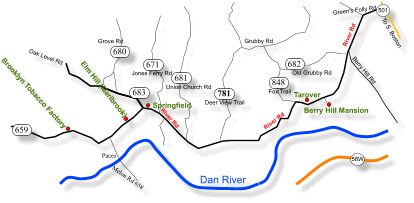
During the 18th century, River Road was part of the main stage route between New York and New Orleans, and the principal road from Halifax County Courthouse to Danville. It was the most heavily traveled road in the County. In the early part of the 19th century the rich soil along the Dan River produced a wealth of tobacco, which was the main export crop from America to Europe. As fortunes rose so did the mansions, a notable gathering of showplaces equal to any in Virginia in style and elegance. It was about the middle of that century that large plantations began to appear along the road.
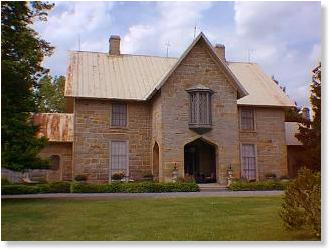 TAROVER is one of the several architecturally distinguished houses located on River Road. Built by Thomas Davenport in 1770, Tarover was sold to Charles Bruce in 1796. In the 1850's Tarover burned. Commissioned by the Bruce family, it was rebuilt in 1851-54 for Thomas Bruce, son of James Coles Bruce for whom the nearby Greek Revival mansion Berry Hill was built. Both Berry Hill and the Gothic-style Staunton Hill, home of James Coles Bruce's half-brother Charles, were designed by their architect and friend John E. Johnson. Of native stone, Tarover is a massive house, Gothic in style, with 14 rooms on three floors. It shares many similarities with Berry Hill, having almost identical floor plans, interior woodwork and similar marble mantels. With its projecting porch with chamber above, lighted by a delicate oriel, the house is based on a Gothic villa design published in A. J. Downing's The Architecture of Country Houses (1850), a work in the Berry Hill library. The house lost some of its original picturesque character around the turn of the century when its icicle-like bargeboards were removed. Tarover remained in the Bruce family until 1891.
Henry and Virginia Zenke of Greensboro, North Carolina, purchased the house and 50 acres in 1969. With much help from their two children, Ginia and Chris, the Zenkes lovingly restored the house.
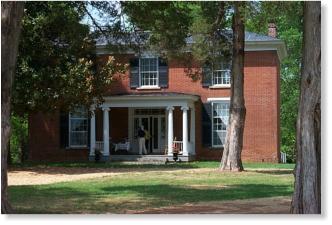 SPRINGFIELD, a 'T' shaped house, is built in the Greek Revival style with fluted Ionic columns supporting the front porch. Originally, a frame house built in 1799 by a Scottish emigrant, Springfield has been owned by eight generations of the same family. Present-day Springfield was remodeled in the mid 1840s when the owner retained the services of Jeffersonian architect and builder, Dabney Minor Cosby. The bricks were made and burned on site, and those not deemed suitable for the house were used to construct the kitchen and dairy. The window and doorsills are of stone quarried from nearby Sandy Creek. All of the exterior woodwork is locust, which was sunk and seasoned in the Dan River for three years to prevent warping.
Thomas Day, best known as a furniture maker in nearby Milton NC, created many architectural features throughout the home, including his signature 'S' curve on the newel post in the entryway, four uniquely-designed mantelpieces in the front part of the house, and double front doors carved by Mr. Day in a style known as 'chamfering.'
The parlor and dining room of Springfield boasts 14-feet high ceilings, triple-hung windows rising to a height of almost ten feet, and niches built on either side of the fireplaces to showcase portraits of the 1840s present-day owners. The upstairs bedrooms feature ten-feet high ceilings and the unusual feature of closets on either side of the fireplaces. Floors are 6' wide tongue-and-groove heart pine boards that span the length of each room.
The banquet table in the dining room stretches to a length of 16 feet and has ten side chairs and two armchairs. On April 10, 1865, while seated around this table, the last official cabinet meeting of the Confederate States of America was held by Jefferson Davis and his cabinet. Much of the furniture, glassware, china and personal possessions date back to this period.
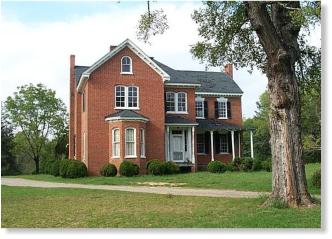 ELM HILL was built by Henry Edmunds about 1808-1810 on a tract of 2435 acres. The original structure consisted of two rooms and a hall on each floor. (This forms the back of the present mansion.) On grounds dotted with elm trees that slope gently to the road, Elm Hill is an exceptionally fine place with interior woodwork delicately carved in the Adam manner featuring beautiful plaster cornices and ceilings that were' and still are' considered some of the finest in Halifax County.
Surveyed in 1793 for Nicholas Edmunds of Brunswick County, the land was willed to his son Thomas, who in turn gave the land to his son, 'Captain' Henry, for $1.00. Capt. Henry was a planter and merchant and acquired part of his fortune while operating a store that stood beside the Episcopal church located on the western edge of the grounds. Having no competition in the area for many years, people came from miles around to trade. Upon his death in 1857, Capt. Edmunds gave Elm Hill to his son, Thomas.
Thomas Edmunds made his home at Elm Hill after his father's death and in 1875 enlarged the mansion with the addition of an ell at the front that included a roof deck complete with railing and trap door. During the remodeling the beautiful plaster cornices on the main floor of the original house were badly cracked and removed. Fortunately, those on the second floor were undamaged. Upon his death in 1879, Elm Hill passed to Thomas's wife, Nannie Coleman Edmunds. In 1894 she and her children sold the estate to Mrs. Mary E. Morris of Colorado.
Elm Hill went through several hands before it was reclaimed by the Edmunds family in the mid-1980s when Paul Edmunds Jr. purchased it from Mr. and Mrs. Brooke Temple.
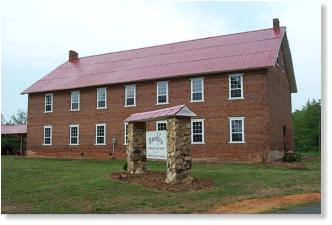 BROOKLYN TOBACCO FACTORY was built in the early 1850s just prior to the completion of the Richmond-to-Danville railroad line in 1855. The superb quality of its brickwork points to noted Halifax County builder, Dabney Cosby Jr. At the time of its construction, the manufacture of plug chewing tobacco was flourishing. The majority of 250 factories were located in rural communities, and most of those were clustered in the heart of the bright tobacco belt on the Virginia-North Carolina border.
Area planters Joshua Hightower and Beverly Barksdale operated the Tobacco Factory until the onset of the Civil War in 1860. Following the War and its aftermath, the factory reopened briefly in the early 1880s. By this time, tobacco manufacturers had abandoned their rural locations for the urban centers of Danville and Martinsville in Virginia and Durham and Winston Salem in North Carolina. Many had installed newly developed steam-powered machinery that increased production, improved quality, and decreased the reliance of manpower. The Factory lapsed into a century of abandonment and neglect.
In 1994 'Ginger' George Gentry purchased the Tobacco Factory. In 1995 preservation consultant J. Daniel Pezzoni of Roanoke VA was hired to document the history and prepare the Factory for nomination to the National Register of Historical Places. The Brooklyn Tobacco Factory was placed on the Virginia Landmarks Register in October 1995 and in January 1996, it joined the ranks of one of the most significant historic properties in the nation.
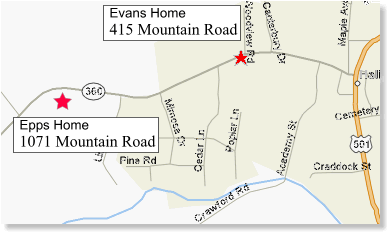
MOUNTAIN ROAD HISTORIC DISTRICT has been called "the prettiest village in Virginia." Located in the county seat of Halifax, the street is lined with notable 19th century homes and buildings that are distinguished by their architecture and beautiful landscape. Its unique qualities have now been recognized by the Virginia Historic Landmarks Commission and the National Register of Historic Places.
EVANS HOME was built by Robert Holt Easley in 1876. Consisting of five outbuildings behind the main house'smokehouse, old kitchen, summer house, pump house, and stone ash house'., the home served as headquarters for a working farm called Banister River Farm until after World War II. The farm covered several hundred acres and remained in the Easley-Evans family for three generations.
 Now situated on six acres of land with an additional thirty-five acres jointly owned by surviving grandchildren and great-grandchildren, the Evans Home has had numerous additions and alterations over the years, and some most recently.
The current owner is R. Holt Easley's grandson and namesake, Colonel R. Holt Evans. Col. Evans retired after a full career in the U.S. Air Force. Significant to the home is the blend of family heirlooms and artwork and collectibles Col. and Mrs. Evans have acquired throughout years of extensive travel and assignments living abroad and throughout the United States. Unique to the furnishings and its many accents are the stories that encompass each.
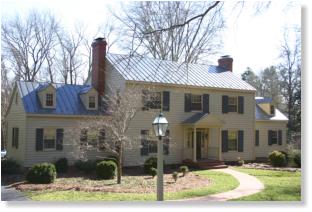 EPPS HOME was the home of Senator and Mrs. Howard P. Anderson until his death in 2000. Built in 1958, this home is one of the newest on its block. Situated on an acre and a half lot with towering oaks and a natural setting, the Colonial reproduction structure fits nicely in a neighborhood that features 19th century homes. The home has had only minor updates. The casual and welcoming style of the home is quite versatile. Remaining are the hardwood floors throughout, three functioning fireplaces, solid cherry cabinets and the back porch that is remembered for its terra cotta tiles that span the entire center portion of the home leaving plenty of room for reading the paper or even entertaining the First Lady.
An added bonus will be the tour of the lawn that features original azalea plantings and new garden attractions, the original blueprints of the home, and various documents and articles from Senator Anderson's career.
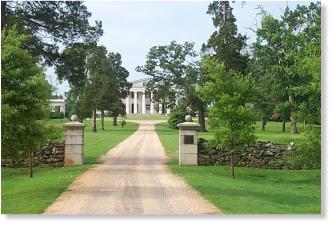 BERRY HILL PLANTATION RESORT is an exciting blend of elegance and luxury, steeped in the charm of Colonial plantation history. Berry Hill Plantation Resort is one of the most distinctive examples of Virginia colonial culture, Greek Revival architecture, and world-class resort destinations in the Southeast. Situated on 750 acres, this former tobacco plantation, complete with its original, stately mansion, has been impeccably restored. The property, and its 92 luxury room hotel, state-of-the-art meeting rooms, fine and casual dining, a full spa, Colonial tavern, horseback riding, carriage rides, historic tours, and other amenities, creates a unique and memorable guest experience. Ticket holders will enjoy a complimentary tour of Berry Hill guided by members of the Halifax Woman's Club. While at Berry Hill, experience the new menu in Darby's Tavern.
The annual Historic Homes Tour presented by the Halifax Woman's Club will be held April 29 & 30, 1:00pm - 5:00pm. Tour tickets are $15 per person.
If you have any questions, please contact Mrs. Kay Lewis (434.572.1641), Dot Clements (434.476.6801), or Betty Yates (434.793.9003).
Back